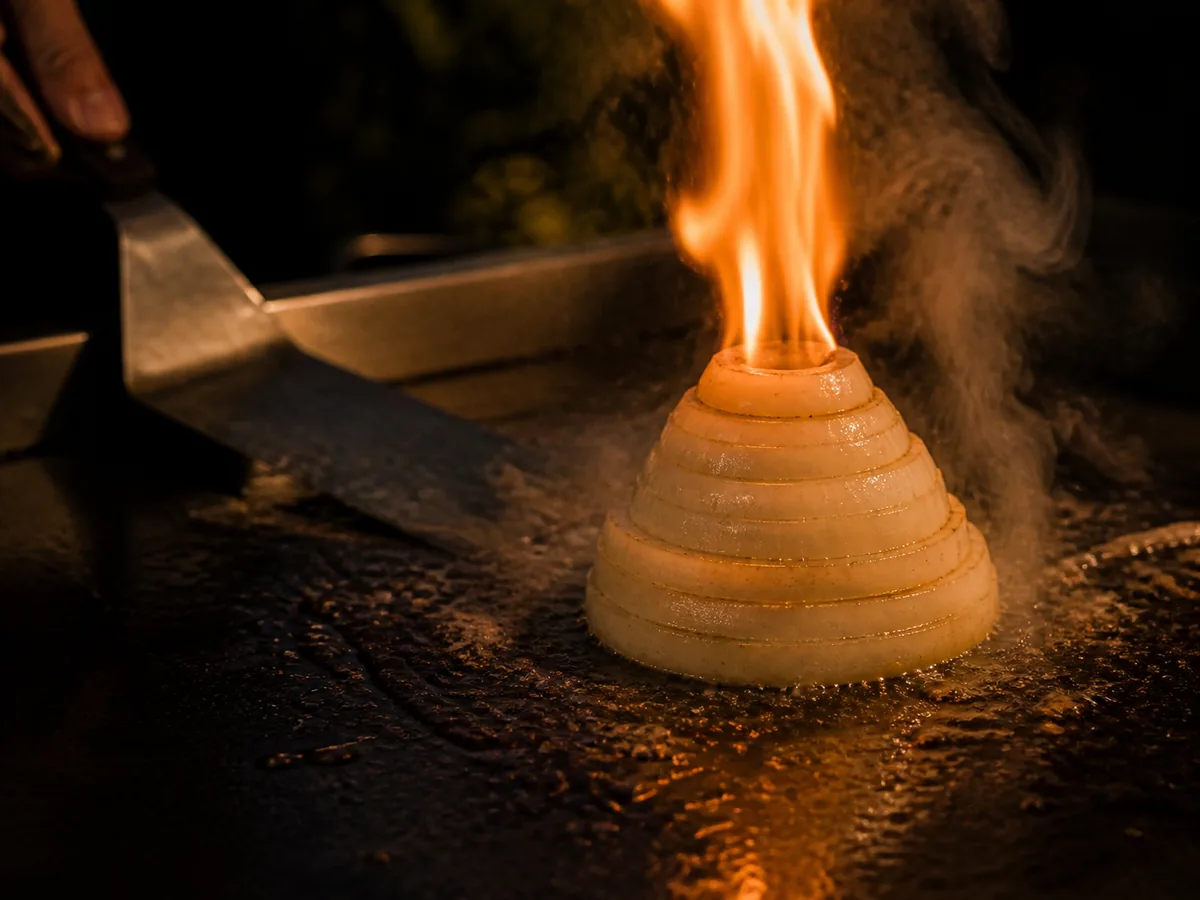
Twenty guests is the size where backyard dinners either work beautifully or fall apart, and it almost always comes down to how the table was laid before anyone arrived.
Our chefs see roughly a thousand of these a year. Here is the arrangement that goes best, and the mistakes that come up again and again.
Start with the grill, not the table
Almost every host lays the table first and then works out where the chef goes. Do it the other way around.
The grill needs about eight by eight feet of flat ground, clearance overhead, and somewhere the propane can sit that is not a walkway. Find that spot first. Everything else arranges itself around it.
The eight-foot rule
Put the near edge of the table about eight feet from the front of the grill. Closer and the front row gets smoke in their faces and flinches through the whole service. Further and the people at the far end stop being able to see what the chef is doing, which is most of what they came for.
Eight feet is close enough to feel like part of it, far enough that nobody is wiping their eyes.
One long table beats three round ones
Round tables are the single most common mistake at this headcount. They look better in photographs and they are much worse to sit at, because at any round table facing a grill roughly a third of your guests have their back to it.
One long run — two or three trestles pushed together — along the width of the cooking area means everyone is facing the same direction and nobody is craning. It also means the chef serves along a line rather than walking between islands, which is faster and hotter off the grill.
What to put out, and what to skip
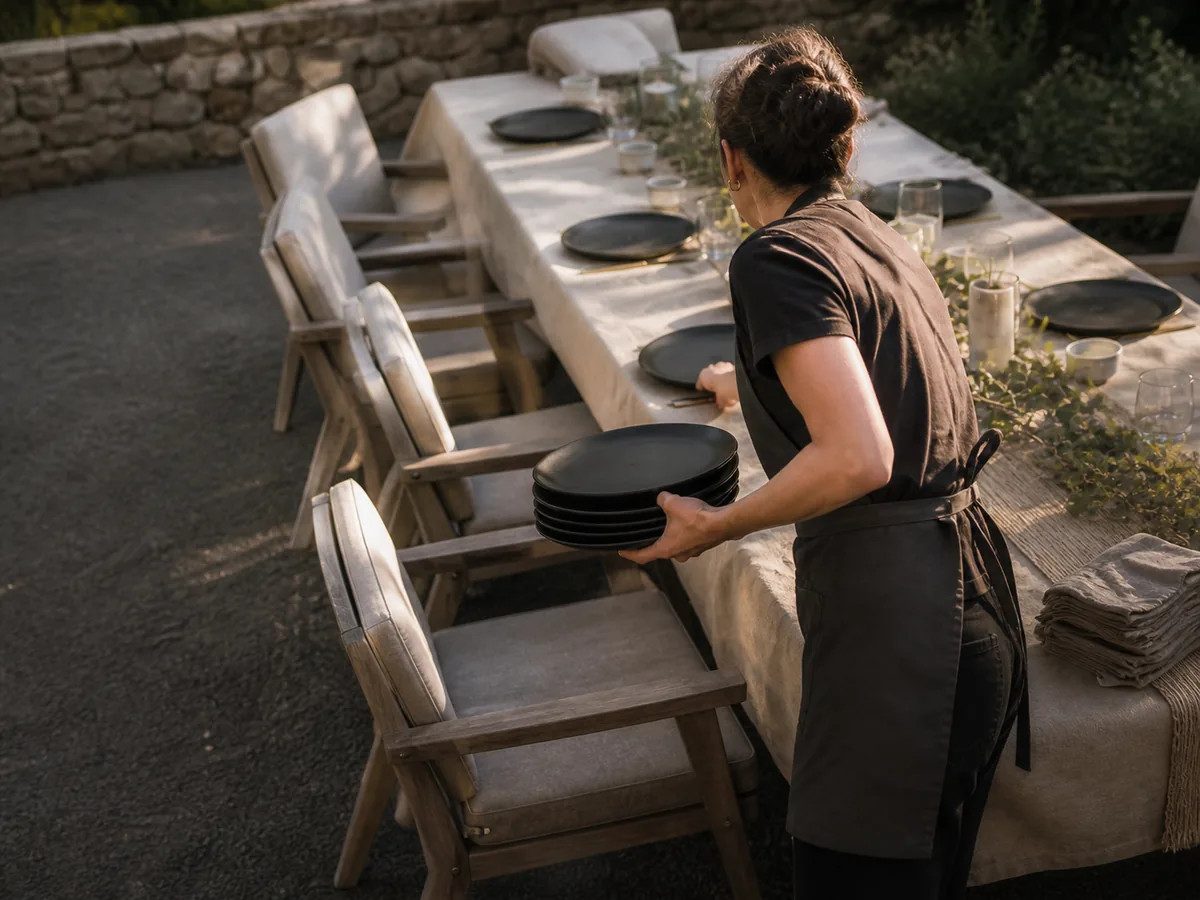
- Plates — one dinner plate per guest, that is all. Courses come off the grill in sequence onto the same plate, which is how hibachi is supposed to work.
- Cutlery — a fork and a knife. Chopsticks if you like, but put forks out too.
- Small bowls — two per guest for the sauces, or shared bowls every four seats.
- Glassware and drinks — entirely yours; we do not supply alcohol.
- Skip the centrepiece — anything tall blocks sightlines to the grill. Low candles and a runner, nothing above about six inches.
Lighting
Most parties start in daylight and end in the dark, and the ones that fade out early are almost always the ones that got dim at the wrong moment.
String lights above the table rather than above the grill — the chef brings plenty of light of their own, and backlighting the flame washes it out. If you only have one run of lights, hang it over the seating and let the grill supply the drama.
Then leave one lamp on near the back door. It sounds trivial. It is the difference between guests drifting inside at ten and staying out until midnight.